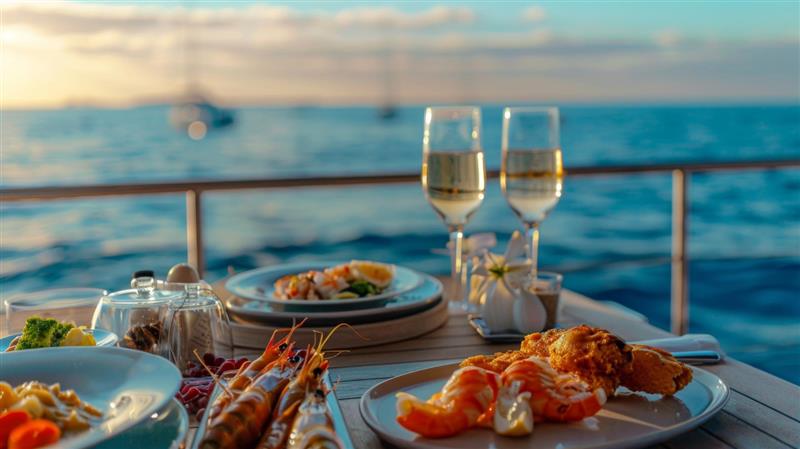
The ultimate cruise experience includes trying out various cuisines and flavors. But food safety is equally important when it comes to cruising. It can be confusing for you to know what foods are okay to eat and which ones to avoid. Also, you need to be aware of the possible risks when choosing what to eat on a cruise. Here are the foods to avoid while you’re on a cruise!

Why Is Food Safety Crucial on a Cruise?
Food safety is crucial on a cruise ship, as it has limited medical resources compared to those available on land. This makes it essential for cruises to be ready for any potential challenges. Foodborne diseases like Salmonella, Norovirus, Hepatitis A, or E. coli could spread, affecting a large number of people.
There are many important reasons to practice food safety on a cruise. Here’s why:
- A cruise is an isolated yet crowded environment, making it susceptible to the rapid spread of illnesses. If one person on the cruise gets sick, it’s very likely that the illness will spread throughout the ship.
- The medical resources available on a cruise are not as extensive as those found on land. They provide you with first aid and other resources, but these alone may not always be sufficient for you.
- On a cruise, a wide range of foods is prepared on a single day and usually exposed for long periods of time. This can lead to the spread of certain viruses. It’s quite an important factor to keep in mind, and that’s why it’s crucial to follow food safety.
- The reputation of a cruise is very important, and an issue with food safety can definitely ruin it.
What Are the 10 Foods to Avoid on a Cruise?
You need to be careful about your food options so that you can enjoy your cruise without any issues. There are some things that you need to keep in mind so that you don’t end up getting sick and ruin your holiday. Here are 10 foods you should avoid while you’re on a cruise.
Sushi/Raw Fish
It doesn’t matter if you’re a sushi lover; it’s better to avoid raw fish while on a cruise. You never know how long the food has been sitting out. Instead, if the sushi is freshly prepared for you, then there’s no harm in eating it.
Egg Dishes
Usually, cruises use powdered or liquid eggs instead of fresh ones. The taste and texture may be very unappealing. It’s better to order fresh eggs at made-to-order stations.
Salads at Buffets
The vegetables and fruits used for buffet salads might not be fresh and will have been sitting out for long periods of time. It’s always better to order fresh salads from restaurants.
Communal Condiments
There are many common condiments, such as ketchup, mustard, and various sauces. These are kept in common containers and handled by a lot of people, causing the transmission of germs. You can either ask them to provide individual packets or use a napkin to serve from the bottle.
Undercooked Meat or Seafood
We all know that undercooked meat is not always healthy, as it can be a breeding ground for bacteria like Salmonella, E. coli, and Listeria. Particularly on cruises, there may be inadequate supervision and a large amount of food preparation.
Open Foods
There’s a high chance you’ll find a lot of food left open, especially in buffets. You don’t actually know how long it has been left out. It’s best to avoid such foods in this case. Instead, opt for freshly prepared foods.
Very Rich or Spicy Food
Spicy foods might be your favorite! Well, you need to be careful because it can increase your risk of heartburn and indigestion. Also, if you’re seasick, these foods can make your stomach even more upset and even lead to food poisoning.
Unpasteurized Dairy Products
Milk products, if not pasteurized, have a high risk of breeding certain kinds of bacteria, which may lead to food poisoning.
Self-Serve Ice Cream
The dispensary machines and cones may not be properly handled, causing a breeding ground for bacteria. Therefore, it is advisable to avoid those options and choose ice cream from stores instead.
Unfamiliar Dishes
There’s no harm in trying out unfamiliar dishes, but it’s always advised to be mindful. If you have dietary restrictions, not knowing the ingredients or how the food was made may affect you. So, it’s always better to know what you are eating.
Top Sources of Food Contamination on a Cruise
- Buffets: The foods displayed on a buffet are typically exposed for long periods of time. This can lead to the contamination of the food, which can degrade its quality.
- Outdoor bars and poolside snacks: Outdoor bars are enjoyed by travelers and attract a lot of guests. This is exactly why they might transmit certain diseases.
- Room service trays: It is quite convenient for you to order food through room service. However, it still poses risks because of shared utensils, improper food handling, and inadequate temperature regulation.
How to Avoid Food Poisoning on a Cruise
Here are a few tips to help you avoid food poisoning while on a cruise:
- Always wash your hands before consuming any food. Norovirus is quite common on cruises and can be transmitted by touching contaminated surfaces. It’s better to be cautious and practice hygiene.
- Consume well-cooked meat and fish. This rules out all the bacteria present in undercooked meat and lowers your chances of food poisoning.
- You should consume bottled water rather than the tap water available on cruises.
- Always consume only freshly cut fruits or vegetables. These can be out in the open for long hours and thereby get exposed to a ton of bacteria.
- Be mindful of the ingredients present and their methods of preparation. This way, you can know if it contains anything you’re allergic to or have a restriction on.
- If you notice any unhygienic food handling practices, please inform the staff promptly to help prevent the spread of bacteria.
What to Do If You Get Food Poisoning on a Cruise
Now you know what foods to avoid and the possible risks of food poisoning, you can avoid getting sick on a cruise. However, no matter how careful you are, it’s possible for you to catch it somehow. Thus, there are several steps you can take to recover quickly and enjoy the remainder of your trip.
- Firstly, you need to visit the ship’s infirmary. They can guide you on the further steps to follow for your safety.
- It’s better to let yourself be alone for a while so as to prevent it from spreading further.
- Identify the source of food poisoning if you can. This can help you deal with it better and also prevent others from getting sick.
- Document everything, and if it’s the cruise’s fault, you have every right to hold them accountable for the same.
- Be mindful of what you eat so it does not upset your stomach further. Rest and recover well before you go on to enjoy your cruise.
How Is Food Safety Maintained on a Cruise
- Cruise lines always make sure that the source of their food items is from legitimate and safe suppliers.
- The temperature is maintained for the respective food, irrespective of whether it is hot or cold. This is to maintain the food quality at the ideal temperature.
- Raw and cooked foods and their utensils must also be separated at all times to prevent bacterial growth.
- All the utensils and dining areas are regularly cleaned so as to prevent the growth of any potential bacteria or viruses.
- Waste management is critical; if not done properly, it can encourage the growth of bacteria and negatively impact travelers’ health.